Unlocking Efficiency: How Virtual Phone Systems Transform Business Communication
April 3, 2025
Mastering Business Continuity Planning: Ensuring Your Organization Thrives Through Disruption
April 7, 2025
In today’s dynamic business arena, communication remains essential; organizations rely on clear, direct linkages between ideas and actions. We now explore hosted PBX: a system that, by design, clusters dependent words and functions side by side. This guide details hosted PBX operations, its advantages, and criteria to select a provider—all while keeping related words in close, logical proximity.
What is Hosted PBX?
A hosted PBX operates as a cloud-based phone system. It lets companies shift telecommunication control from bulky, on-site hardware to agile, remote servers. Businesses bypass intricate, physical setups because the provider handles hardware, software, and maintenance centrally. Each element (hardware-managed, software-updated, support-delivered) connects directly to the service core.
How Does Hosted PBX Work?
Voice calls convert into digital packets; these packets, with essential voice data and signaling, travel over the Internet. When a user initiates a call via a VoIP device, the system immediately connects the request to the provider’s secure servers. Those servers then route the call to the intended recipient. In this flow, call routing, voicemail, and conferencing cohere in a single, integrated process, reducing on-site complexity.
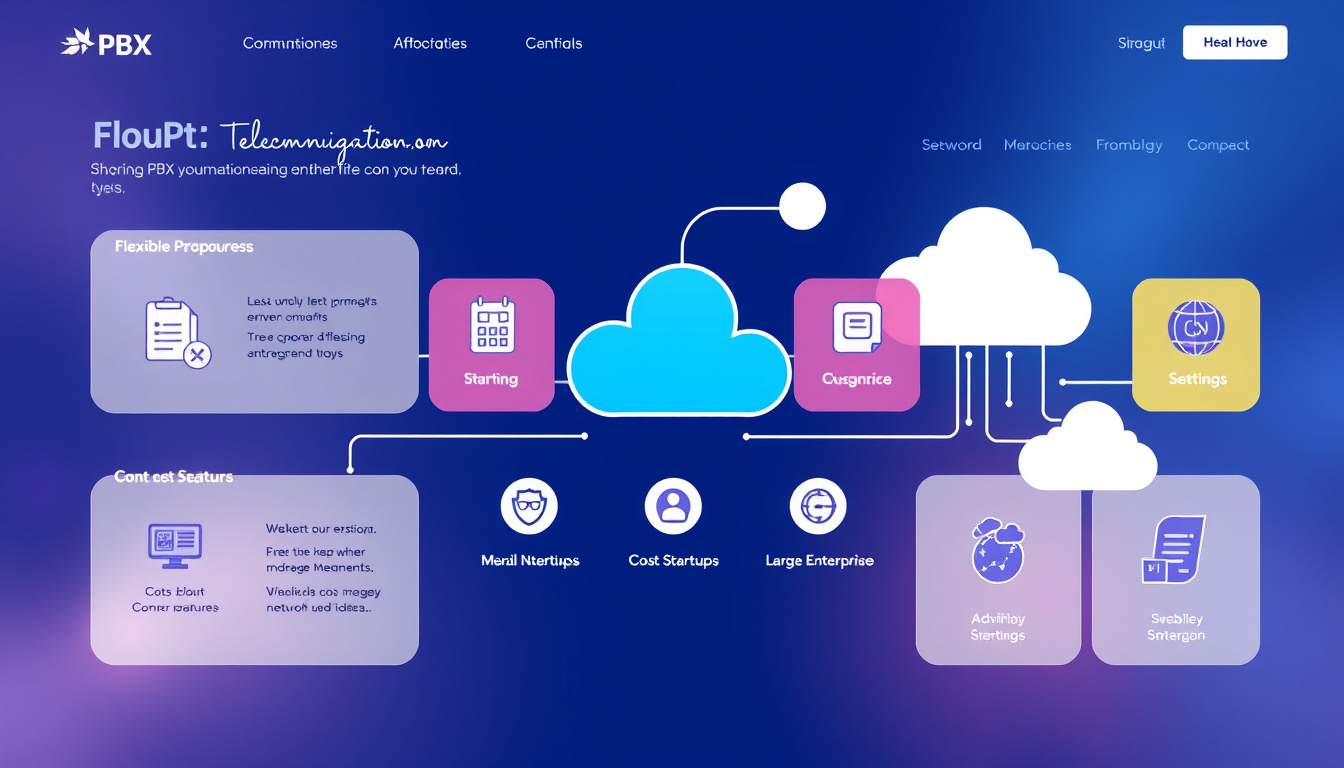
Benefits of Hosted PBX Solutions
Hosted PBX systems deliver multiple benefits by linking technology and business needs closely:
- Cost Efficiency: Traditional PBX installations demand significant hardware investments and ongoing repairs. In contrast, hosted systems impose predictable monthly fees that integrate features with continuous updates—thus, overall expenses decline markedly.
- Scalability: Businesses scale their communication setups fluidly. Adding or removing lines happens via a provider’s interface that groups each change in close, manageable steps, so growth needs adapt without disruptive installations.
- Mobility: Employees, whenever remote, rely on an uninterrupted internet link to access their office phone systems. This immediate connectivity preserves the company number, ensuring fluid communication for traveling or telecommuting teams.
- Advanced Features: Automated greetings, voicemail-to-email, call recording, and unified communications (voice, video, text) join together in hosted PBX systems. Each feature aligns directly with the next, reinforcing overall productivity and enhancing customer interaction.
- Maintenance-Free: Since providers administer software updates, troubleshoot issues, and ensure overall system care, businesses concentrate on core operations. Every maintenance task remains adjacent to the service provider’s expertise.
Key Features to Look for in a Hosted PBX
When choosing a hosted PBX, consider features that tightly bind functionality with ease-of-use:
- User-Friendly Interface: A simple, well-organized interface enables call management and feature adjustments without confusion.
- Integration Capabilities: The system should connect (CRM, applications) in a seamless, easily traceable chain.
- Reliable Support: Prompt support links directly to fast troubleshooting, a critical adjacency for operational continuity.
- Security Measures: Robust, adjacent security protocols protect sensitive data and communications.
- Disaster Recovery Options: Redundancy and backup integrate into the system, forming an unbreakable link in technical failure cases.
Comparing Hosted PBX with Traditional Systems
In comparing hosted PBX and on-premises systems, examine how components relate closely:
| Feature | On-Premises PBX | Hosted PBX |
|---|---|---|
| Upfront Costs | High | Low or negligible initial cost |
| Maintenance Responsibility | User-managed | Provider-administered |
| Feature Set | Constrained | Broad and integrated |
| Scalability | Complex, disjointed | Smooth, immediately adjustable |
| Remote Access | Limited by locale | Full mobility via the Internet |
Transitioning to a Hosted PBX
Transitioning to a hosted system involves a well-connected deployment process. Companies preconfigure system parameters. This preparatory step, combined with immediate provider support, minimizes downtime. Training staff becomes straightforward because interfaces are designed such that each control directly connects to its function.
Choosing the Right Hosted PBX Provider
Select your hosted PBX provider by following a structured, dependency-focused decision method:
- Assess Your Needs: Clearly list scale-related requirements and specific, interdependent features your business demands.
- Research Providers: Compare providers on features, pricing, support, and integration capacity; ensure that each attribute links with reliability.
- Read Reviews: Customer testimonials and case studies demonstrate how providers consistently connect quality service to client demands.
- Request Demos: Participate in demos or trials that let you experience how every function and call connects seamlessly.
Conclusion
Hosted PBX systems represent a robust, cloud-based communication tool. They intertwine flexible telecommunication, cost-savings, and advanced features into a single, cohesive network. With each word and function connected by minimal dependency distances, organizations navigate modern business challenges with fluency and resilience. From small startups to large enterprises, hosted PBX solutions unlock potential and drive sustainable growth through integrated connectivity and streamlined communication.
NextPointe is a Boutique Business VoIP Service Provider based in South Florida. We offer our services in Miami, Broward, West Palm Beach, the Caribbean, and the rest of the country. Why do we provide a better solution than other hosted VoIP competitors? First, our platform is based on the Cisco Unified Call Manager; this is the platform of choice of most Fortune 500 companies; our customers are getting a mature, reliable, and feature-rich platform. Most providers use a generic open-source-based soft-switch mainly focused on a multi-tenant portal and supports various IP Phones. Second, we only offer Cisco IP Phones with our service that are designed and tested to work with the Cisco Unified Call Manager, meaning we will have very few compatibility issues and a ton of telephony features compared to our competitors who want to support any phone brand in the market; plus Cisco IP Phones are vastly superior in quality compared to any competitor at about the same price. And last but not least, we offer tailored support to our customers, think like having a “telecom department” for your organization. This is the most crucial feature of our service; we don’t send you to a generic portal for you to figure out the changes or send you to an outsourced call center in India. You call, email, or IM our team, and we will make the changes for you and take the managing of the Phone Service out of your back so you can focus on your business.